
Pool-deck surfaces
Pool Deck Pavers and Repairs
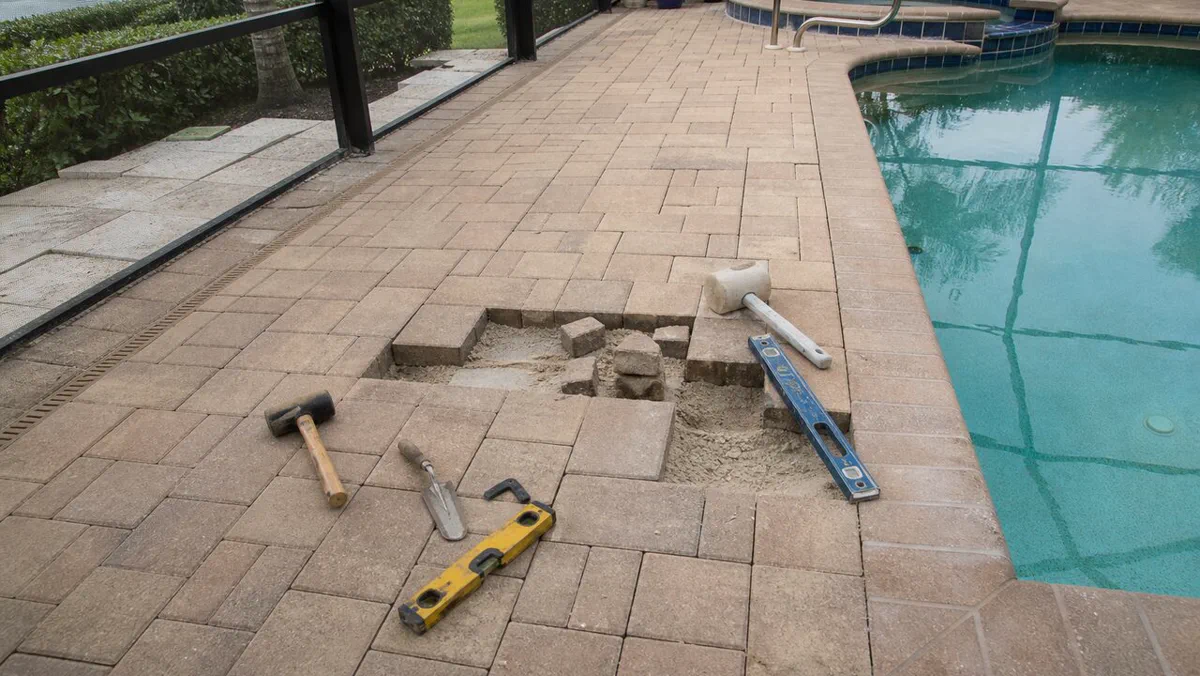
Pool-deck pavers have to handle water, bare feet, furniture, screen-enclosure access, and coping transitions. Small trip points around a pool feel bigger because people are wet and barefoot.
Pool-deck surfaces
Pool decks need careful transitions
Coping edges, drains, screen posts, ladders, and patio doors can all create places where pavers settle or lift. The repair should protect the pool edge and keep the walking surface predictable.
Pool-deck surfaces
Drainage matters around the cage and deck
Tampa Bay storms can push water across the deck, into joints, and toward low borders. A reset or new layout should account for where that water exits.
Scope detail
Pool-deck decisions that matter
For pool decks, comfort and safety matter around coping, drains, screen doors, wet walking paths, and furniture areas. Repairs should preserve clean height transitions and avoid trapping water at the pool edge.
Homeowner checkpoint
Pool-deck proof to ask for
Pool-deck paver work should protect barefoot transitions around coping, drains, screen doors, and wet traffic paths. If pavers are moving near the pool edge, the explanation should cover water movement before recommending a broad reset.
Pool Deck Paver Questions
Can pool-deck pavers be reset near coping?
Often, but the coping edge and surrounding deck height need careful attention so the transition stays safe and clean.
Why do pool-deck pavers move?
Water, joint sand loss, roots, base movement, and repeated wet traffic can all contribute.
Should sealing happen before or after repair?
Repair and stabilization should come first. Sealing over a moving or uneven area does not solve the underlying issue.
Pool-deck pavers can settle from age, base washout, or water movement beneath the surface. If damp spots keep returning near the coping, consider whether a hidden pool leak under the deck is contributing before resetting the same area again.