
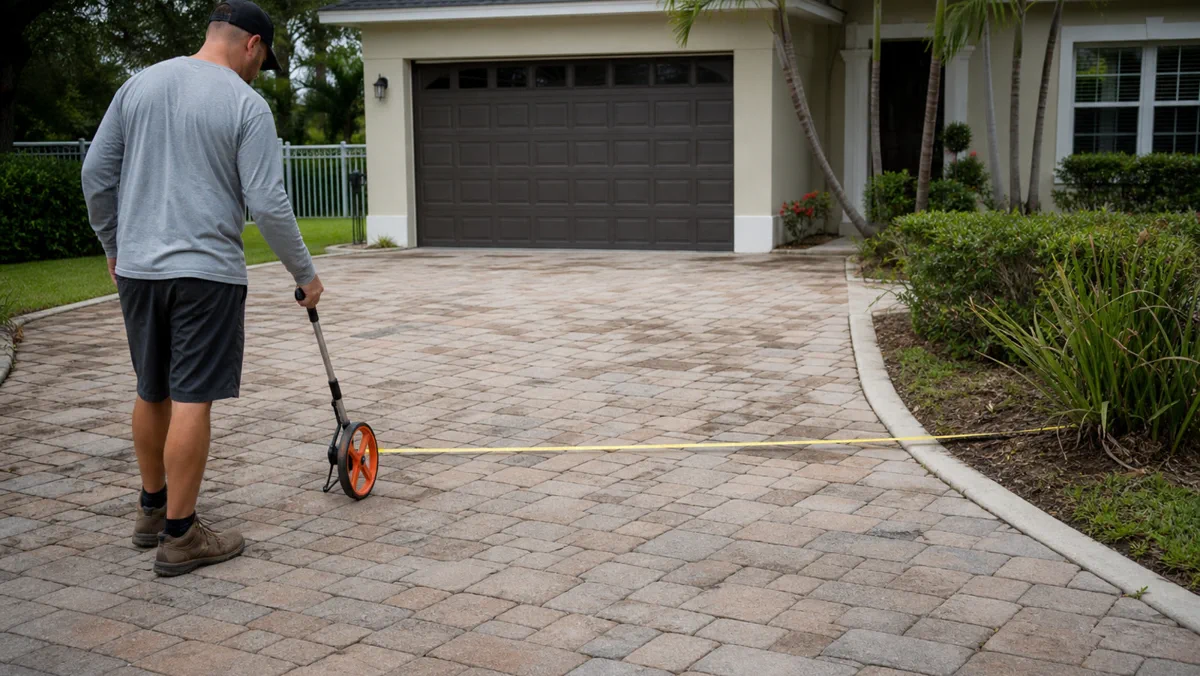
Sinking, loose, or uneven sections
Sunken spots, rocking pavers, trip edges, spreading borders, and low areas that hold water are common reasons to ask about repair or partial replacement.
Tampa Bay paver repair and installation
If part of your driveway, patio, walkway, or pool deck is sinking, separating, or wearing out, you can call or fill out the form even if you do not know the cause yet. A quick description of the surface and what looks wrong is enough to start.
Common reasons to call
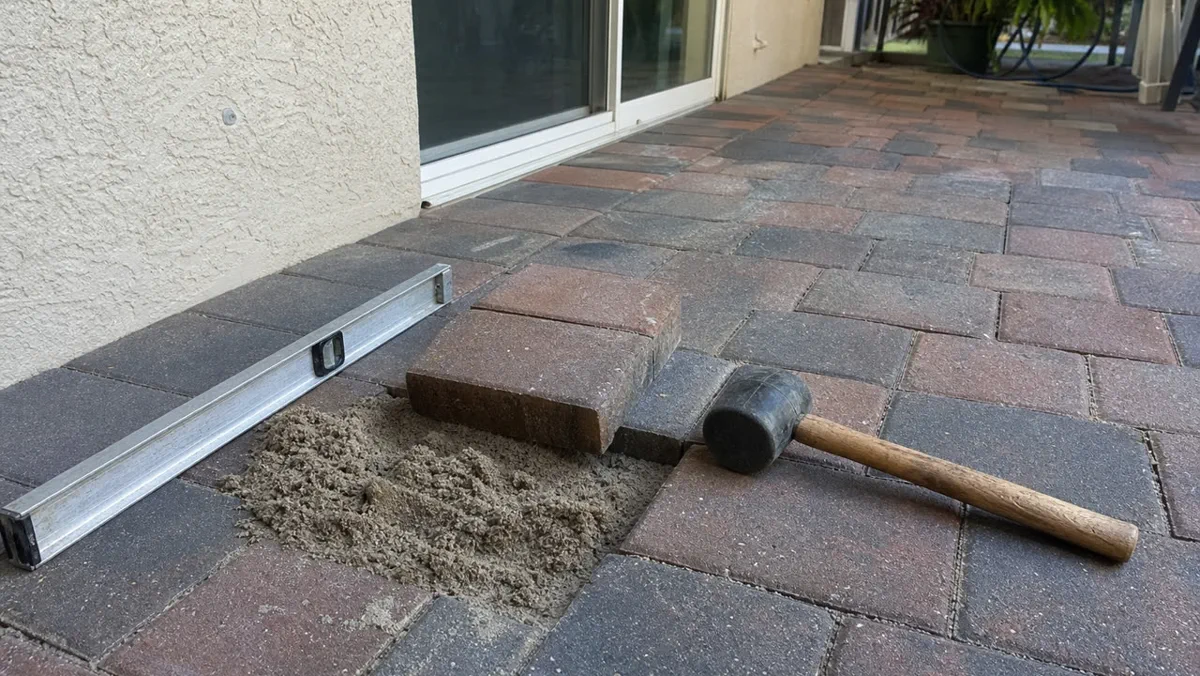
Sunken spots, rocking pavers, trip edges, spreading borders, and low areas that hold water are common reasons to ask about repair or partial replacement.

Heavy rain, missing joint sand, washed-out edges, sealer failure, and surface movement can all point to work that goes beyond a simple cosmetic touch-up.
Why the problem happens
Loose pavers often trace back to base movement, water, edge failure, or surface wear, so the cause matters as much as the visible spot that shifted.
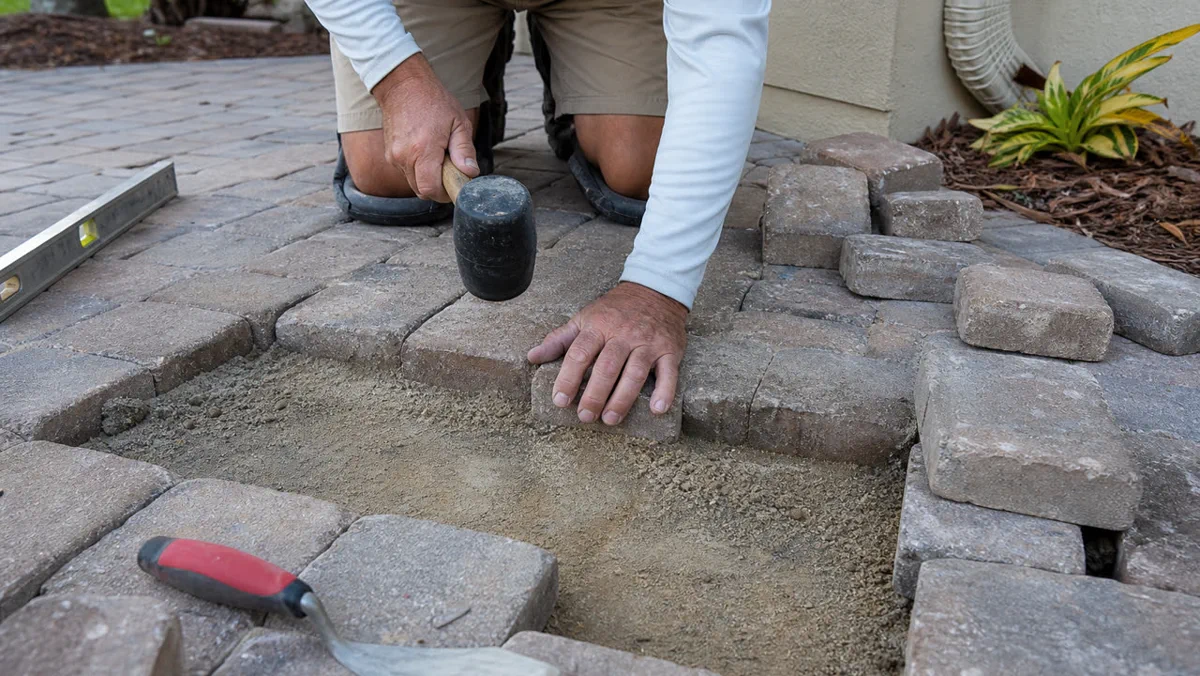
A localized reset may be enough when the surrounding surface is stable. Broader movement, drainage trouble, or widespread wear can point to a larger scope.
A good next step is figuring out whether the issue is isolated, whether water is involved, and whether repair, rebuilding, sealing, or new installation makes the most sense.
Service scope
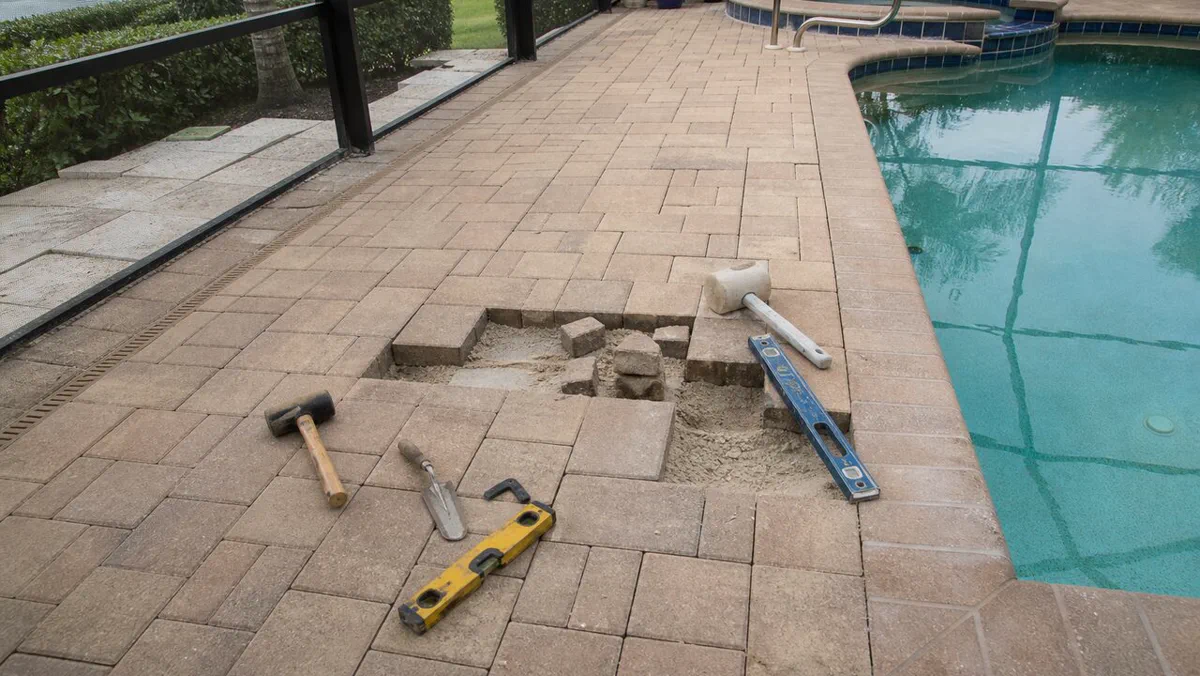
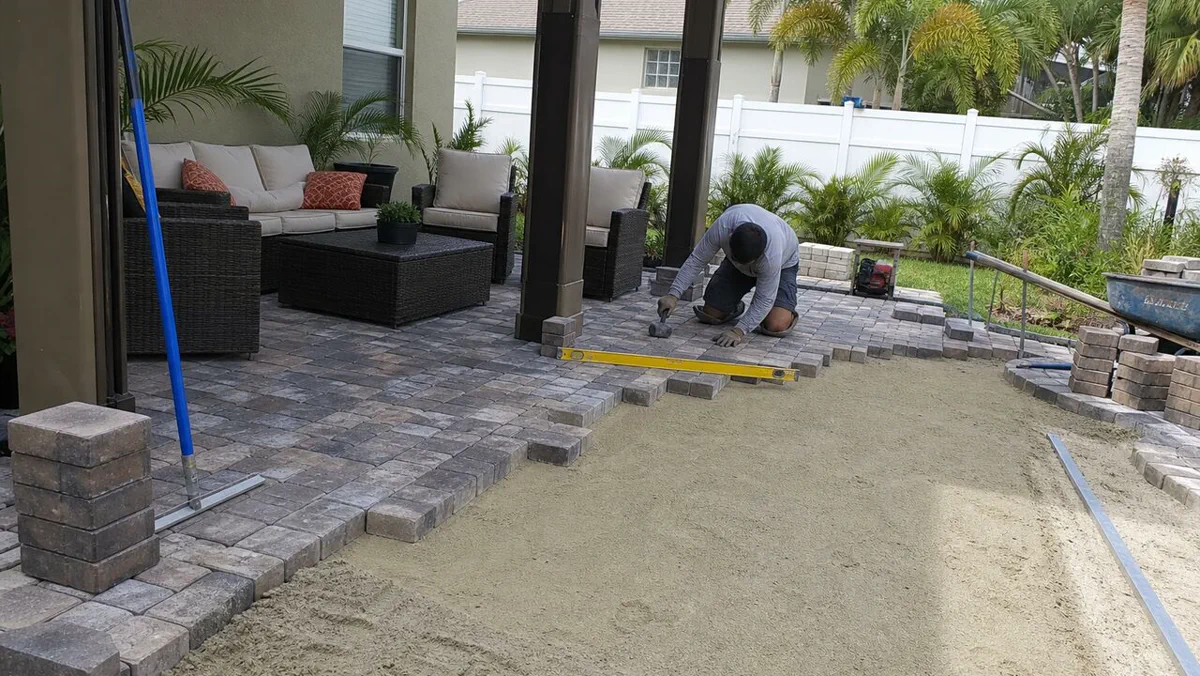
A project might involve lifting and resetting sunken areas, replacing broken pavers, correcting edges, restoring joint sand, improving drainage, sealing after prep, or planning a larger new installation.
Local conditions
Tampa Bay paver surfaces deal with heavy rain, sandy soil movement, heat, pool-deck moisture, driveway traffic, and washout along edges. Those local conditions often explain why a section starts moving and why the right fix depends on more than the visible spot.
Cost and scope factors
Cost usually depends on how much has moved, whether the base or drainage needs attention, how easy the area is to reach, and whether sections need to be matched, repaired, or rebuilt.
After you reach out
Share which area is affected and whether the pavers are sinking, separating, holding water, worn out, or ready for a new layout.
A follow-up can sort out drainage, access, matching, base movement, and whether the job sounds like repair, replacement, sealing prep, or new installation.
Some homeowners move forward with a focused repair, while others need a broader rebuild or fresh installation plan. The goal is a clear next step, not guesswork.
Ready to talk through the issue
Call or use the form when part of the surface is sinking, separating, washing out, or ready for a new layout. You can reach out before you have photos, measurements, or a full diagnosis.
Confirm license, insurance, workmanship terms, reviews, and project examples directly with the company handling the work before the job begins.
Sunken sections, loose pavers, spreading borders, open joints, trip points, and standing water are all good reasons to ask about the next step.
No. Many problems can be repaired locally when the surrounding surface is still stable, but the reason for the movement should still be checked.
Usually just the area involved and what seems wrong. You can call before you have measurements, photos, or a full diagnosis.
Settlement often points to water movement, base washout, weak edge restraint, or lost joint sand. Tampa Bay storms, irrigation overspray, downspouts, and pool-deck drainage can all contribute.
Sealing is usually worth discussing after loose, sunken, or washed-out areas are stable and joint sand is corrected. It should not be used to cover up movement or drainage problems.
No. Photos can help if you already have them, but they are optional. A simple description of the surface and the issue is enough to start.