
Reset settled pavers
Paver Repair in Tampa Bay
Settled pavers usually point to a base, edge, sand, drainage, or traffic problem. The repair plan should start with why the surface moved, not just with putting the same stones back in place.
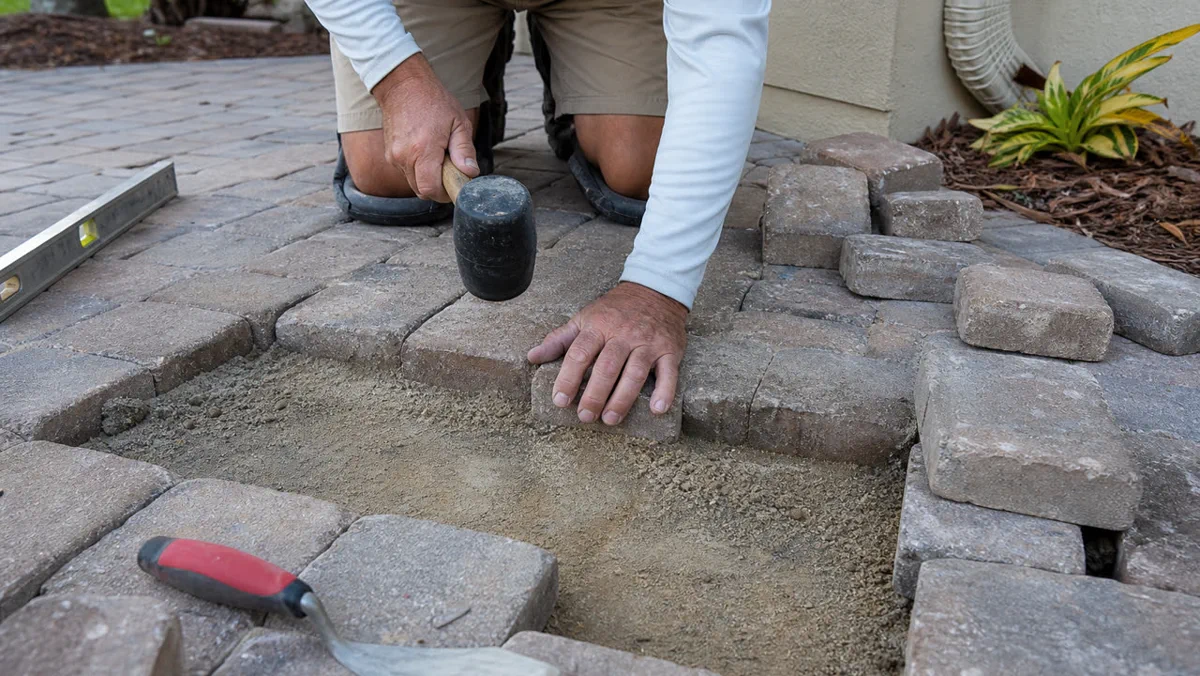
Reset settled pavers
Where paver repairs usually start
Low spots, rocking pieces, open joints, edge creep, tire ruts, and trip points all tell a different story. Tampa Bay rain, irrigation, sand washout, roots, and pool-deck runoff can make a small repair keep moving if the cause is missed.
Reset settled pavers
What a durable reset should clarify
The first look should identify how far the problem spreads, whether the border restraint is holding, how water crosses the area, and whether the base needs more than a quick lift-and-set.
Scope detail
Repair scope details that matter
For repair calls, the most useful paver facts are the size of the sunken area, whether borders are spreading, whether water crosses the spot, and whether matching pavers are available on site. A small repair is strongest when the surrounding field is still stable.
Homeowner checkpoint
Repair proof to ask for
A useful paver repair explanation should point to the cause of movement: washout, edge failure, irrigation, roots, heavy traffic, or an unstable base. The repair boundary should be clear before stones are lifted, and the finished section should tie back into stable surrounding pavers.
Paver Repair Questions
Can sunken pavers be reset without replacing the whole area?
Often yes, when the surrounding base and borders are still sound. The work should still check why that section settled so it does not repeat.
Why do pavers sink in Tampa Bay?
Common causes include washout, soft base, irrigation leaks, poor edge restraint, vehicle loading, roots, and water moving under the field.
What photos help before a repair conversation?
Send close photos of the low area, a wider shot showing drainage and edges, and any places where joints are opening or borders are spreading.