
Patios and outdoor rooms
Patio Pavers in Tampa Bay
Patio pavers should match how the backyard is used: seating, grilling, shade, door swing, drainage, and the route people take from the house or pool.
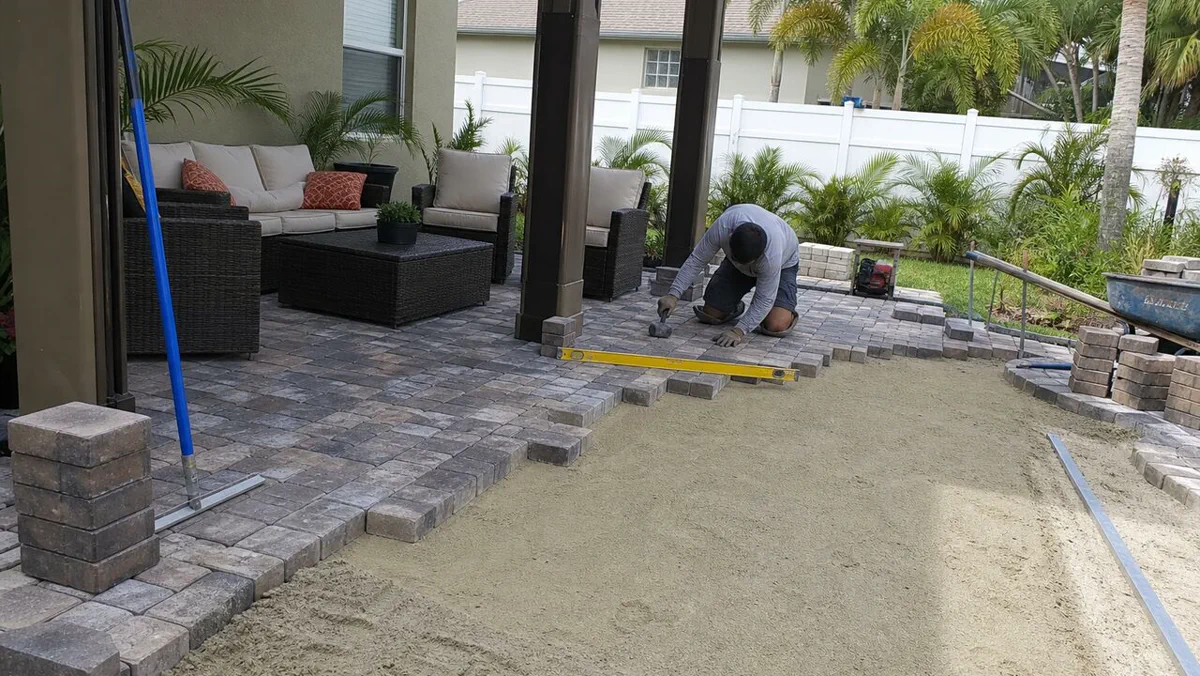
Patios and outdoor rooms
A patio should solve the outdoor layout
The best patio size is not always the biggest slab of pavers. Furniture spacing, grill clearance, step-downs, screen enclosures, and yard slope all shape the useful footprint.
Patios and outdoor rooms
Repair decisions are different on patios
Loose or low patio pavers can come from soft base, roots, downspouts, or washed joints. The fix should look at the surrounding path of water before resetting the area.
Scope detail
Patio decisions that matter
For patios, the best layout depends on seating, grill clearance, shade, door swing, steps, and how water leaves the backyard. A patio repair should also check downspouts and roots before the reset boundary is chosen.
Homeowner checkpoint
Patio proof to ask for
Patio paver planning should show furniture clearance, grill space, door transitions, drainage, and how the surface will meet turf, steps, or landscaping. A repair should also identify whether roots or downspouts are moving the base.
Patio Paver Questions
How large should a paver patio be?
Start with furniture, grill clearance, walking space, and door transitions. The size should fit the way the patio will actually be used.
Can patio pavers be repaired around roots?
Sometimes, but root movement and future growth should be considered before simply resetting the same area.
What causes patio pavers to stay wet?
Low slope, downspouts, compacted yard areas, and blocked drainage paths can keep water on or under the surface.