
Seal after the surface is ready
Paver Sealing and Joint Sand
Sealing can improve appearance and help protect joint sand, but it should not be used to hide movement, low areas, stains, or drainage problems that need attention first.
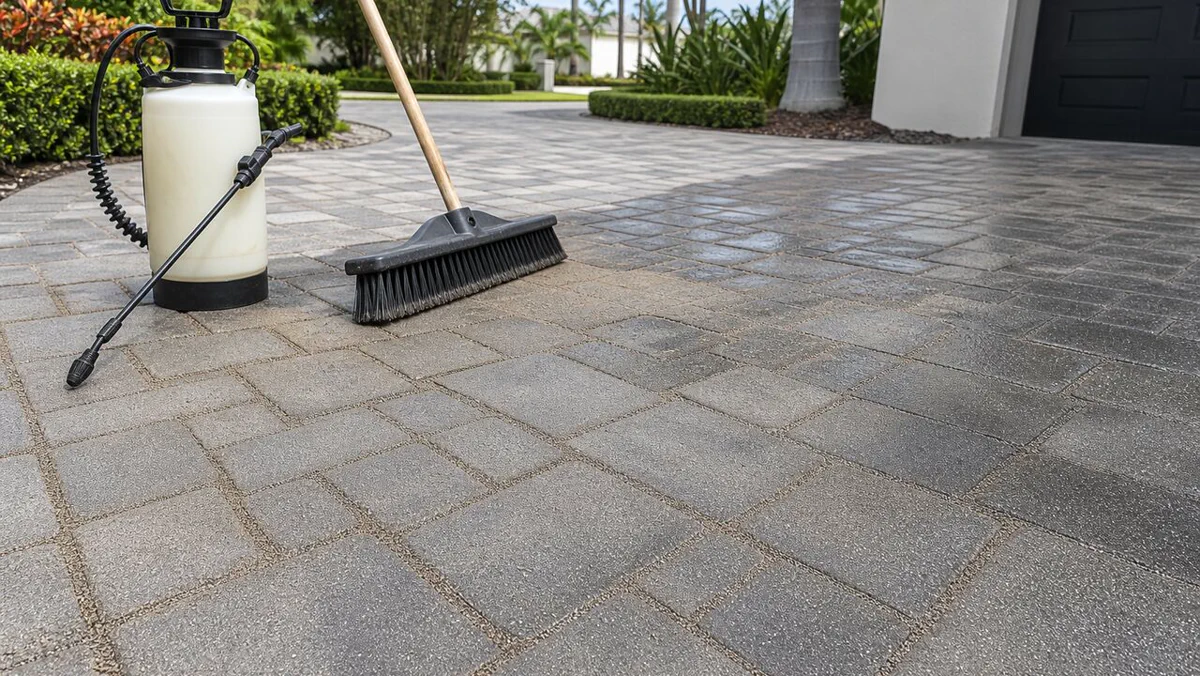
Seal after the surface is ready
Prep decides the result
Cleaning, dry time, joint sand condition, stains, efflorescence, and previous sealer all affect the finished look. A rushed seal job can lock in problems.
Seal after the surface is ready
Know when repair comes first
If pavers are loose, uneven, or holding water, the surface should be stabilized before sealing is discussed as a finishing step.
For homeowners trying to sort out finish timing after the repair work is done, this paver sealing maintenance guide is a useful reference for what should happen after the surface is stable.
Scope detail
Sealing decisions that matter
For sealing, the surface should be reviewed for loose pavers, missing sand, cloudy old sealer, weeds, efflorescence, stains, and slippery spots. Prep and joint sand determine whether the finish looks clean.
Homeowner checkpoint
Sealing proof to ask for
Sealing should come after repair, cleaning, and joint-sand decisions. Ask how old sealer, cloudy areas, slippery spots, missing sand, weeds, and drainage will be handled before any finish coat is applied.
Paver Sealing Questions
Will sealing fix loose pavers?
No. Loose or uneven pavers should be repaired before sealing. Sealer is a finish step, not a base repair.
How do I know if old sealer is a problem?
Cloudy, peeling, slippery, or uneven sheen can indicate prior sealer issues that need to be discussed before new work.
Does every paver surface need sealing?
No. It depends on surface condition, appearance goals, joint sand needs, and how the area is used.